You notice it slowly. The parting looks a little wider than it used to. The crown feels thinner when you run your fingers through. Your ponytail isn't as thick as before. You're not finding hair on your pillow or in the shower but something is definitely changing.
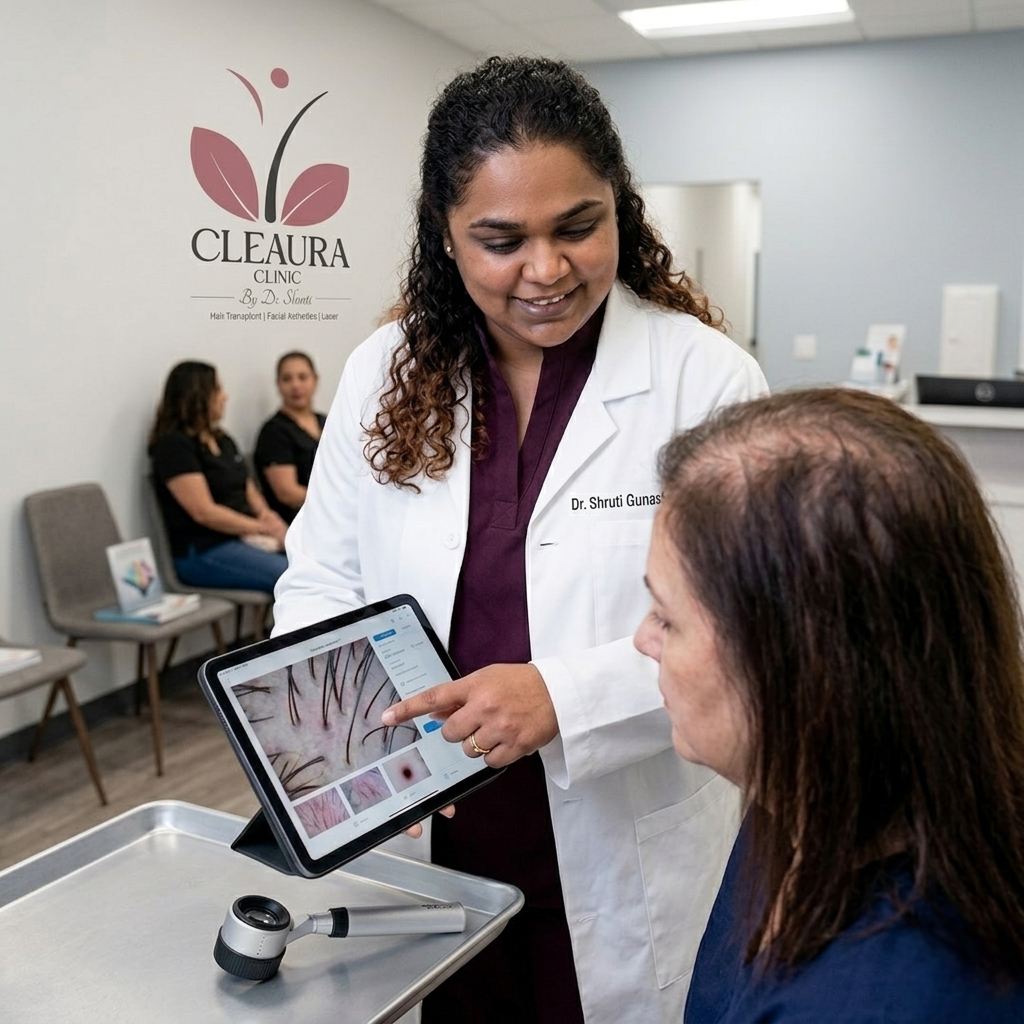
That is female pattern hair loss (FPHL). It is not the same as hair fall or general hair thinning and it needs a different diagnosis and a different treatment entirely. At Cleaura Clinic, Nagpur, Dr. Shruti Gunashekhar uses trichoscopy, Ludwig staging, and a full hormonal blood panel to identify the exact cause of your FPHL and build a treatment plan that actually matches your stage.
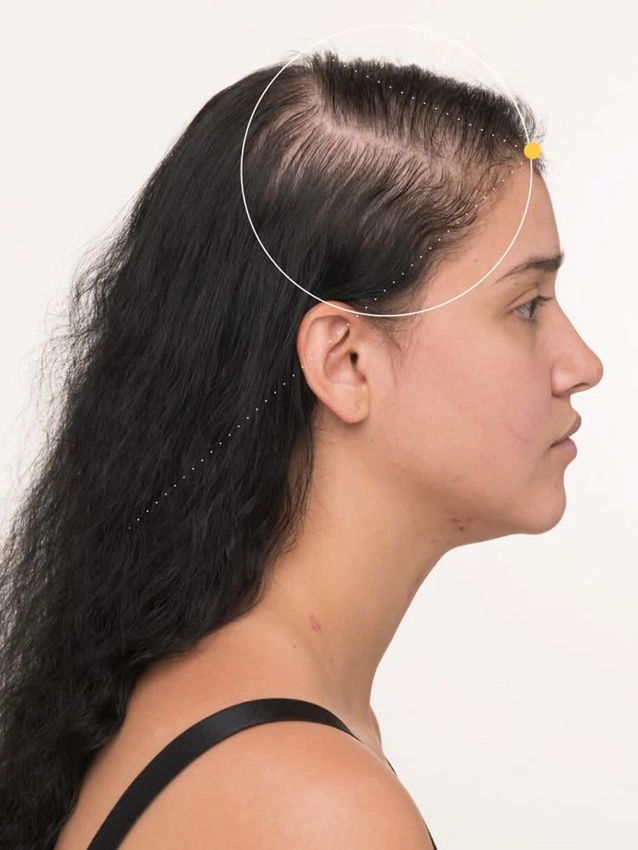
Female pattern hair loss - medically called androgenetic alopecia in women - is a progressive condition where hair follicles shrink over time due to hormonal sensitivity. The follicles don't fall out. They slowly miniaturise and stop producing visible hair.
This is what makes FPHL different from hair fall. In hair fall, strands shed actively and you notice hair on your pillow, brush, or floor. In FPHL, the hair quietly stops growing. The scalp gradually becomes visible - especially at the crown and central parting - while the frontal hairline usually stays intact.
FPHL is driven by two things working together. DHT (Dihydrotestosterone) - a hormone derived from testosterone - binds to scalp follicles in genetically sensitive women and causes them to shrink progressively. Declining estrogen - which normally protects follicles from DHT activity - falls due to menopause, PCOS, post-pregnancy changes, or age, making DHT's effect stronger.
The result is a predictable, pattern-based loss concentrated at the crown - not scattered shedding across the scalp.
Book Free Consultation →
Female pattern hair loss (FPHL) is a hormonal and genetic condition where hair follicles gradually stop producing hair - starting at the crown and widening parting line. It is caused by DHT sensitivity and declining estrogen, not daily shedding or stress. At Cleaura Clinic, Nagpur, Dr. Shruti Gunashekhar diagnoses FPHL using trichoscopy and blood tests, then builds a treatment plan based on your Ludwig stage because Stage I responds very differently from Stage III.
Key Point: FPHL is not caused by washing your hair too often, tight ponytails, or stress alone. It is a hormonal and genetic condition that requires a clinical diagnosis - not a shampoo. If you have been told "it's normal" without a trichoscopy or blood test, you haven't had a proper assessment yet.
This is the most common source of confusion among women visiting Cleaura and it matters because the treatment is completely different for each condition. Identifying which one you have is the first step to effective treatment.
Many women in Nagpur spend months using the wrong products or treatments because FPHL, hair fall, and hair thinning are mistakenly treated as the same problem. They are not. Understanding the difference is the starting point of any effective treatment plan.
| Condition | What You Notice | Root Cause | Treated At Cleaura |
|---|---|---|---|
| Female Pattern Hair Loss (FPHL) | Widening parting, crown thinning, scalp visible in good lighting - minimal active shedding | Genetic DHT sensitivity + declining estrogen. Follicles miniaturise and stop producing hair | You are on the right page - see treatment options below |
| Hair Fall | Strands on pillow, brush, floor, shower drain - active shedding of more than 100 strands daily | Stress, nutritional deficiency, thyroid, scalp infection, dandruff - usually temporary and reversible | Hair Fall Treatment in Nagpur → |
| Hair Thinning | Overall reduction in density and strand thickness - hair feels limp and fine across the whole scalp | Early FPHL, nutritional deficiency, damage, or hormonal fluctuation - not always crown-first | Hair Loss Treatment in Nagpur → |
If you are a woman noticing a widening central parting, visible scalp at the crown, or hair that simply isn't growing back the way it used to that points specifically to FPHL, not general hair loss. Book a trichoscopy assessment with Dr. Shruti →
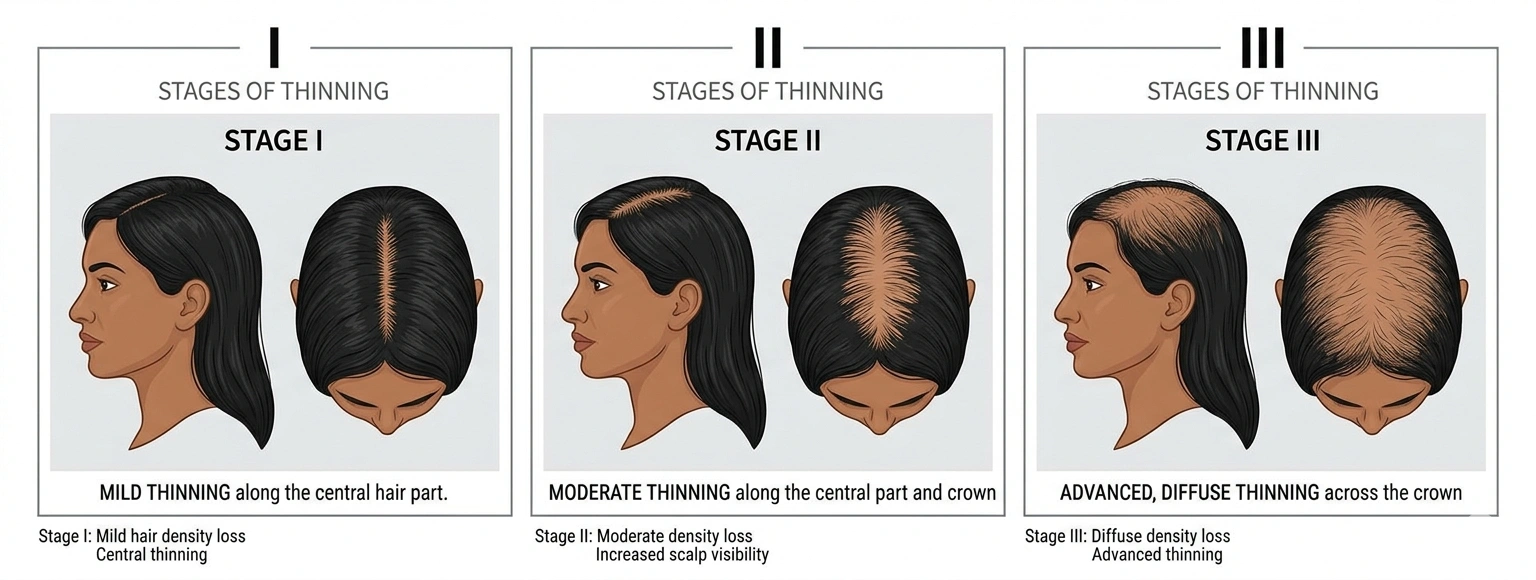
Female pattern hair loss progresses through three stages, classified using the Ludwig Scale. Your stage determines which treatment works and how urgent it is to start. The single most common mistake FPHL patients make is waiting until Stage III before seeking treatment.
The central parting looks slightly wider than before. Hair density at the crown is beginning to reduce. Frontal hairline is completely intact. Most women at this stage assume it is normal and wait. Do not wait. Stage I has the strongest treatment response of any stage — follicles are miniaturising but still fully alive.
The parting is noticeably wider. The crown area shows clear thinning. Hair volume is visibly reduced when tied back. Treatment at this stage can significantly slow progression and restore meaningful density but requires a committed protocol combining multiple approaches.
Diffuse thinning across the entire crown. The scalp is visible through the hair in natural light. Treatment focuses on halting further progression and exploring surgical hair restoration if appropriate. Not all Stage III cases are transplant candidates - a detailed assessment determines eligibility.
At Cleaura Clinic: Dr. Shruti uses trichoscopy to assess your exact Ludwig stage before recommending any treatment. No guesswork. No generic prescription. Your stage determines your plan not the other way around.
FPHL is genetic at its root - but several hormonal triggers can accelerate or unmask it. Unlike hair fall caused by stress or diet, these triggers are internal and hormonal - meaning shampoos, supplements, and scalp massages do not address them.
Identifying your specific trigger is exactly what the diagnostic phase at Cleaura is designed to do - before any treatment begins.
PCOS (Polycystic Ovary Syndrome) - Elevated androgens from PCOS increase DHT activity significantly. PCOS-related FPHL is increasingly common in Nagpur women aged 22 to 35 and is frequently misdiagnosed as general hair thinning. If you have irregular periods, acne, and hair loss at the crown, PCOS needs to be ruled out first.
Menopause - Estrogen levels drop sharply during menopause, removing its protective effect on hair follicles. DHT activity accelerates. Women who never had hair loss concerns before menopause can develop noticeable FPHL within 12 to 18 months of their last period.
Post-Pregnancy Hormonal Shift - After delivery, estrogen falls rapidly. Many women experience significant shedding (telogen effluvium) in the first 3 to 6 months — this is temporary. However, in women with underlying FPHL tendency, this hormonal drop can trigger or accelerate pattern loss. Both conditions can coexist and require separate treatment strategies.
Thyroid Disorders - Both hypothyroidism and hyperthyroidism affect the hair growth cycle. When thyroid dysfunction coexists with genetic DHT sensitivity, FPHL progresses significantly faster than it would with normal thyroid function.
Birth Control Changes - Starting, stopping, or switching oral contraceptives can trigger hormonal fluctuations that accelerate DHT activity in women with FPHL tendency. Some progesterone-dominant pills can specifically worsen FPHL - a detail most women are never told.
Family History - FPHL is inherited from both maternal and paternal sides. If your mother, maternal grandmother, or paternal grandmother experienced thinning at the crown, your risk is significantly elevated. Genetic susceptibility is not preventable but early intervention dramatically improves outcomes.
FPHL diagnosis requires more than looking at your scalp. The hormonal cause needs to be identified — because treatment depends on it. At Cleaura Clinic, Nagpur, every female pattern hair loss assessment follows a structured diagnostic protocol before any treatment is recommended.
This is what separates an accurate FPHL treatment plan from a generic hair loss prescription — and it is the first thing Dr. Shruti does at your free consultation.
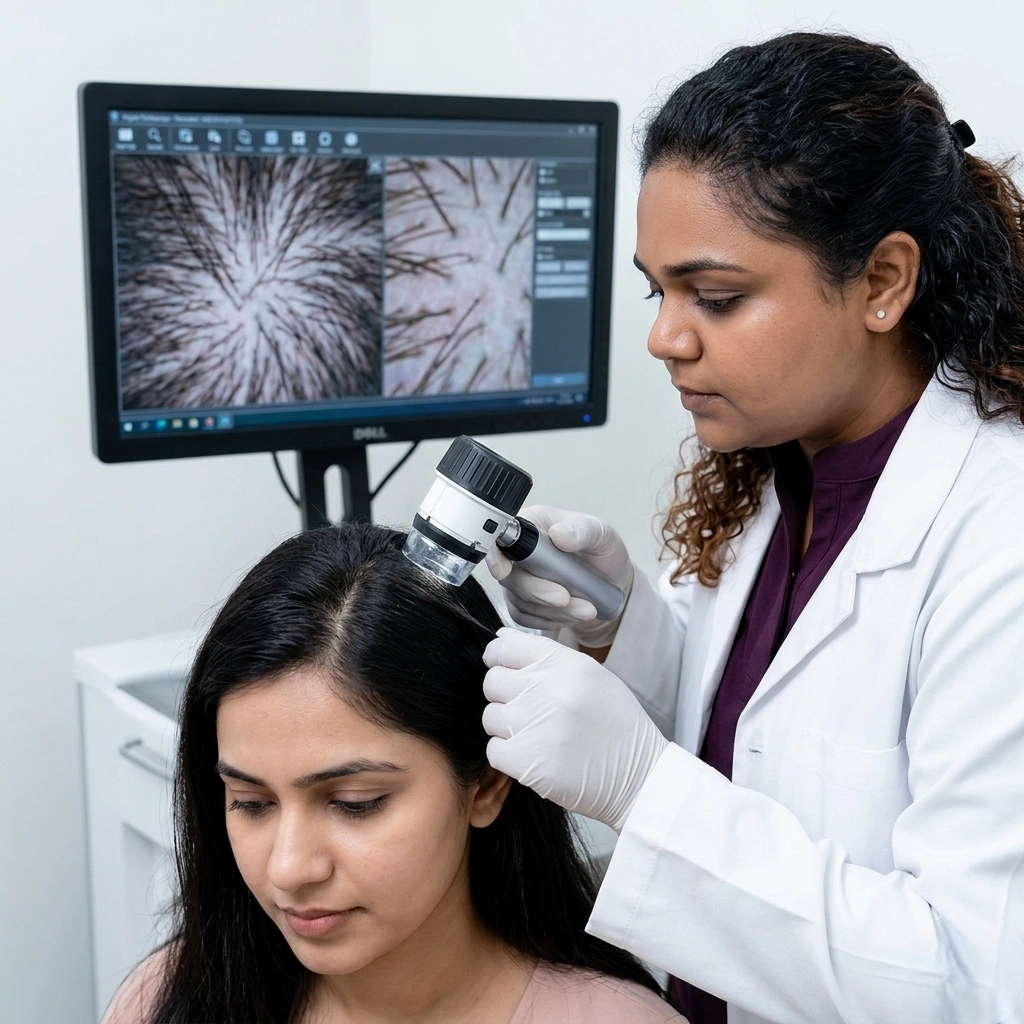
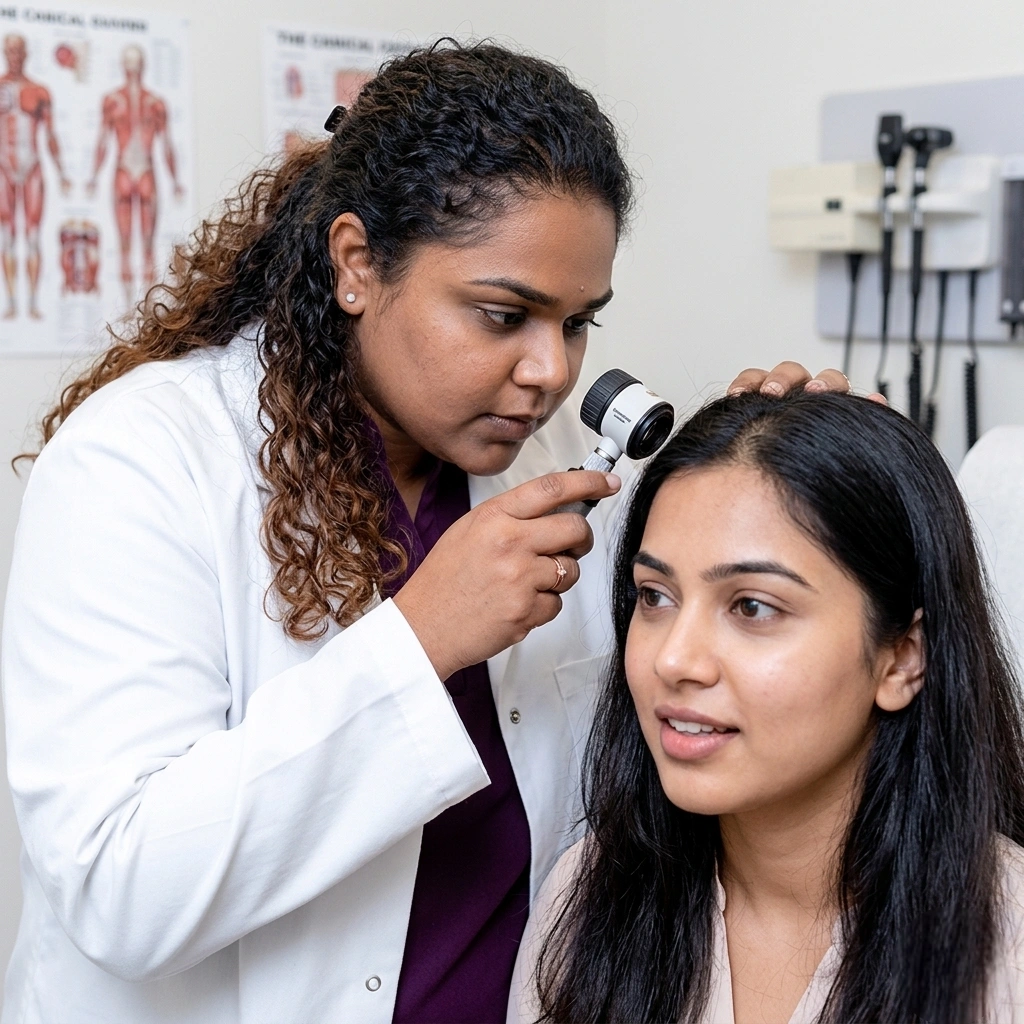
Dr. Shruti examines your scalp under high magnification to assess follicle miniaturisation, hair shaft diameter variability, and the pattern of loss. This confirms FPHL and distinguishes it from other causes of hair thinning. A hair pull test assesses whether active shedding is also present alongside the pattern loss.
A targeted panel covering DHT, estrogen, testosterone, DHEA-S, thyroid (TSH, T3, T4), ferritin, and insulin resistance markers. This identifies the specific hormonal driver behind your FPHL — so treatment addresses the actual cause, not just the symptom. Takes one blood draw, results in 24–48 hours.
In younger women presenting with FPHL, Dr. Shruti specifically evaluates for PCOS as an underlying hormonal cause before recommending any treatment. PCOS-related FPHL requires a different treatment protocol than post-menopausal or genetically driven FPHL — and is frequently the cause in Nagpur women under 35.
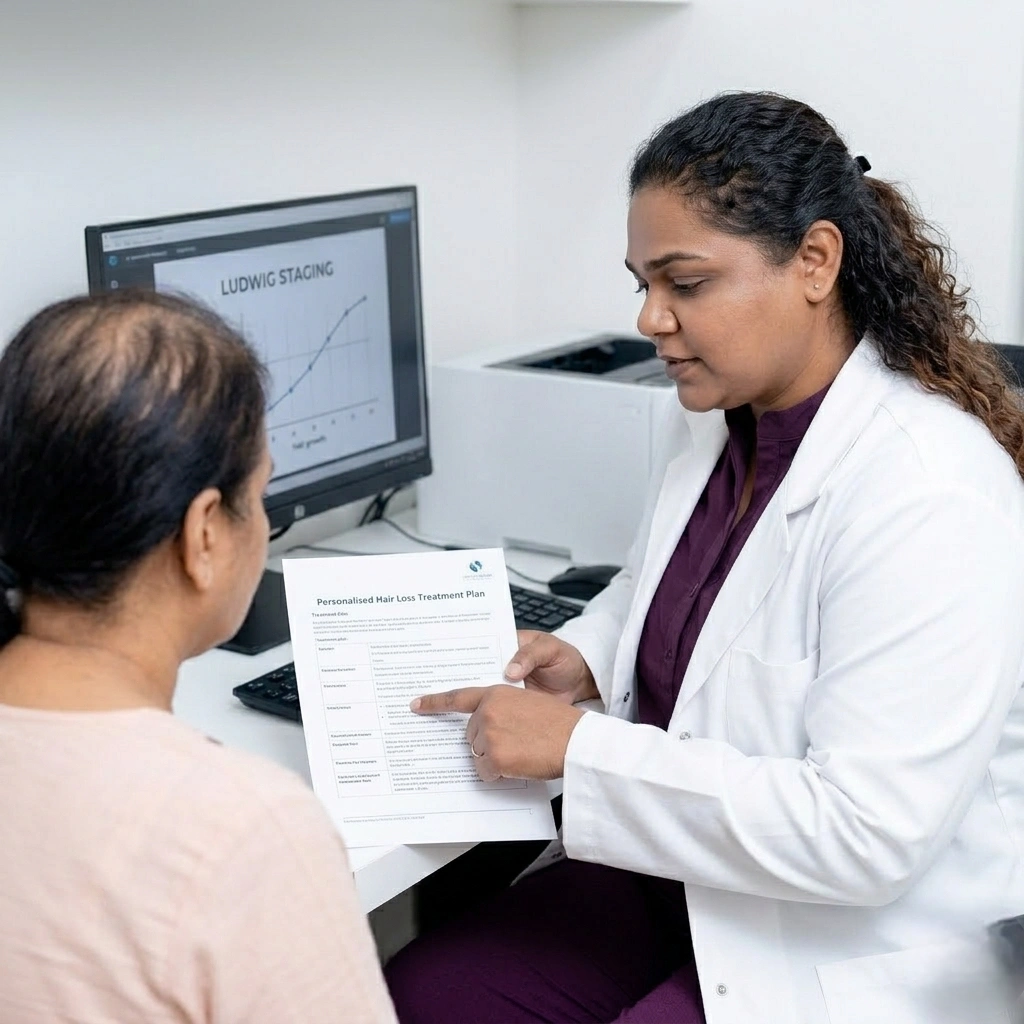
Based on trichoscopy findings and hormonal results, Dr. Shruti stages your FPHL and builds a personalised treatment plan matched to your exact stage, trigger, and medical history. No generic prescriptions. No standard packages applied without clinical justification. A follow-up review is included after each treatment phase.
Full diagnostic consultation time: approximately 45–60 minutes. This includes trichoscopy assessment, medical history review, PCOS screening where indicated, and a personalised treatment plan discussion. No generic advice. No pressure to commit before you are ready. Book Free Consultation →
FPHL progresses slowly and is easy to dismiss in its early stages. Most women who visit Cleaura say they noticed the signs a year or two before seeking help — by which time the Ludwig stage has advanced and treatment options are more limited. If any of the following signs are familiar, an assessment is worth booking immediately.
The earlier FPHL is caught, the better PRP, minoxidil, and anti-androgen therapy work - because the follicles are still alive and responsive. Waiting is the most expensive thing you can do with female pattern hair loss.
| What You're Noticing | What It Likely Means | FPHL Indicator? |
|---|---|---|
| Central parting looks wider than it used to - even without active shedding | Early follicle miniaturisation at the crown - hair not growing back after each cycle | Strong indicator of Ludwig Stage I FPHL. Best time to start treatment. |
| Scalp visible through hair in good lighting at the crown or top of the head | Diffuse density reduction from DHT-driven follicle shrinkage — moderate FPHL | Yes - Ludwig Stage II. Treatment urgently recommended before further follicle loss. |
| Ponytail thinner and shorter than it used to be - same length but less volume | Follicles producing thinner, shorter hair shafts - classic sign of miniaturisation | Yes - early to moderate FPHL. Very treatable at this stage with PRP + minoxidil. |
| Hair feels fine and limp even after washing - no volume from roots | Hair shaft thinning from follicle miniaturisation - losing diameter at the root | Yes - a consistent sign of FPHL rather than scalp-related hair fall. |
| Hair loss at the crown - with irregular periods, acne, or weight gain | Likely PCOS-related androgenetic alopecia - elevated DHT from androgen excess | Yes - PCOS-driven FPHL. Requires hormonal assessment and targeted anti-androgen protocol. |
| Crown thinning worsening after menopause - despite no previous hair loss history | Loss of estrogen's protective effect - DHT now acts without hormonal counterbalance | Yes - post-menopausal FPHL. Treatable with minoxidil and hormonal support where appropriate. |
| Hair thinning that started or worsened after stopping birth control pills | Hormonal fluctuation revealing underlying FPHL tendency - progesterone shift | Yes - birth control withdrawal can unmask latent FPHL. Dr. Shruti will assess hormonal history. |
| Mother, maternal grandmother, or paternal grandmother had crown thinning | Genetic predisposition to DHT sensitivity - FPHL risk significantly elevated | Risk factor - not a diagnosis alone, but warrants early trichoscopy assessment at Cleaura. |
| Patchy circular bald spots appearing suddenly - rather than crown pattern | Possible alopecia areata — autoimmune condition, not FPHL - requires separate diagnosis | Not FPHL - needs medical assessment. Dr. Shruti will differentiate and advise appropriate treatment. |
Every treatment at Cleaura is matched to your Ludwig stage and hormonal profile. These are not general hair loss treatments repurposed for women — they are selected specifically because of how they work on the hormonal-genetic mechanism of FPHL. Dr. Shruti confirms the correct protocol or combination of protocols after reviewing your trichoscopy findings and blood panel results.
Minoxidil is the only FDA-approved treatment specifically for female pattern hair loss. It works by widening blood vessels around the follicle and extending the active growth phase - allowing miniaturised follicles to produce thicker, longer hair again.
Topical application is used for mild to moderate FPHL. Low-dose oral minoxidil is considered for women who need stronger systemic support - particularly in PCOS-related or post-menopausal FPHL where topical application alone is insufficient.
Best for: All Ludwig stages. Results begin at 3 to 4 months with consistent use. Must be continued as a maintenance treatment - stopping minoxidil reverses its effects over 6 to 12 months.
For women where elevated DHT or androgen activity is confirmed through blood tests, Dr. Shruti may include anti-androgen medication such as spironolactone or equivalent agents. This directly reduces DHT's effect on genetically sensitive follicles - addressing the root hormonal cause rather than just stimulating growth.
This treatment is unique to FPHL - it is not used for general hair fall or thinning and requires hormonal confirmation before prescription. It is one of the most powerful tools available for PCOS-related and hormonally driven FPHL.
Best for: Women with confirmed elevated androgens or DHT. PCOS-related FPHL. Prescribed only after blood panel review by Dr. Shruti.
PRP for FPHL works differently from PRP for active hair shedding. In FPHL, growth factors from your own blood plasma are injected into follicles that have miniaturised due to hormonal activity - stimulating reactivation of dormant follicles that are still alive but no longer producing visible hair.
Best for: Ludwig Stage I and II. Most effective when combined with minoxidil for sustained results. Most patients notice visible improvement in crown density after 3 to 4 sessions.
Typical course: 4–6 sessions spaced 3–4 weeks apart, followed by maintenance every 4–6 months. Learn more about PRP at Cleaura →
GFC is a more refined version of PRP with a higher concentration of growth factors - isolated from your blood with minimal red and white blood cells remaining. The result is a purer, more potent follicle stimulation signal with less post-session redness and discomfort.
Best for: Women with sensitive scalps, those who experienced significant redness with standard PRP, and moderate to advanced FPHL requiring maximum growth factor delivery per session.
Typical course: 3–4 sessions spaced 4 weeks apart. Results often become visible earlier than standard PRP due to higher growth factor concentration.
Photobiomodulation therapy that improves blood circulation at the scalp level and stimulates miniaturised follicles through light energy - with no downtime, no injections, and no discomfort. LLLT is used as part of a combined FPHL protocol to support and extend the effects of minoxidil and PRP.
Best for: Ludwig Stage I to II as part of a combined treatment approach. Particularly useful for women who are unable to tolerate injections or need a supportive therapy between PRP sessions.
Frequency: Planned as part of your overall FPHL protocol by Dr. Shruti based on your stage and response to primary treatment.
In women with Ludwig Stage III FPHL where significant follicle loss has occurred and medical treatment has stabilised progression, FUE hair transplant is considered. Dr. Shruti evaluates donor area density, pattern stability, and hormonal status before recommending surgical intervention.
Important: Not all Stage III cases are transplant candidates. Active FPHL progression must be stabilised before transplant - transplanting into an actively thinning scalp produces poor results. A detailed assessment determines eligibility.
Best for: Stable Stage III FPHL with adequate donor density. Post-transplant PRP is routinely recommended to accelerate graft healing and improve final density.
| Treatment | Best Ludwig Stage | Downtime | Results Timeline | Available at Cleaura? |
|---|---|---|---|---|
| Minoxidil (Topical/Oral) | All stages | None | 3–4 months | Yes |
| Anti-Androgen Therapy | All stages (post blood panel) | None | 3–6 months | Yes |
| PRP Therapy | Stage I - II | None | 3–6 months | Yes |
| GFC Therapy | Stage I - II (sensitive scalp) | None | 2–5 months | Yes |
| LLLT | Stage I - II | None | 4–6 months | Yes |
| FUE Hair Transplant | Stable Stage III only | 7-10 days | 9-12 months | Yes |
Not sure which treatment suits your condition? Dr. Shruti will assess your scalp using trichoscopy, review your hormonal blood panel, and recommend the exact protocol or combination that gives you the best chance of meaningful, lasting results. No guesswork. No upselling.
Book Free Consultation →FPHL treatment works best when started early - when follicles are miniaturising but still alive. The further hair loss has progressed, the more limited the options. This guide helps you understand where you likely stand and what to do next.
Check If Treatment Is Right for You →| Your Condition | Treatment Suitability |
|---|---|
| Widening central parting with intact frontal hairline - early crown thinning | Excellent - Ludwig Stage I. Best results achieved here. Follicles still fully alive and highly responsive to minoxidil, PRP, and anti-androgen therapy. |
| Noticeably visible scalp at crown - reduced ponytail volume | Very Good - Ludwig Stage II. Meaningful density restoration is achievable. Requires a combined treatment approach — minoxidil + PRP or GFC - sustained over 6 to 12 months. |
| PCOS-related crown thinning in women under 35 - with irregular periods or acne | Highly Effective - PCOS-driven FPHL responds very well to anti-androgen therapy combined with PRP. Hormonal management alongside treatment improves outcomes significantly. |
| Post-menopausal hair loss at the crown — new onset or rapidly worsening | Good - Minoxidil and hormonal support deliver meaningful results. Starting early after menopause onset gives the best long-term outcome. |
| Post-pregnancy crown thinning - 3 to 6 months after delivery | Good - If underlying FPHL tendency exists, early treatment after hormones stabilise gives strong results. Not recommended during breastfeeding - Dr. Shruti will advise timing. |
| Diffuse thinning across the entire crown - scalp visible in natural light | Moderate - Ludwig Stage III. Medical treatment can stabilise further loss. FUE transplant assessed if pattern is stable and donor density is adequate. Requires detailed individual assessment. |
| Complete smooth bald areas - no visible follicle activity | Limited - Permanently inactive follicles do not respond to medical treatment. FUE hair transplant assessment required if eligible. |
Pregnancy - Minoxidil and anti-androgen therapy are contraindicated during pregnancy. PRP is deferred as a precautionary measure. Treatment timing is planned around the pregnancy and breastfeeding period — Dr. Shruti will advise a safe start date.
Active scalp infection or open wounds - PRP and GFC injections must be deferred until the scalp is fully healed. Topical and systemic treatment can often continue Dr. Shruti will advise what is safe.
Very low platelet count (thrombocytopenia) - PRP relies on concentrating your own platelets. A clinically low baseline platelet count reduces PRP effectiveness. A blood test confirms this before your first session.
Patients on blood thinners or anticoagulant medication - Affects platelet function and PRP effectiveness. Dr. Shruti will advise whether a medication pause is possible before PRP sessions begin.
Active autoimmune conditions - Conditions like lupus or rheumatoid arthritis may affect PRP and GFC outcomes. Dr. Shruti reviews your full medical history before confirming treatment eligibility.
Recent chemotherapy or steroid injections - A waiting period is required before PRP can be administered safely. Anti-androgen and minoxidil protocols are also reviewed in the context of recent systemic treatments.
Not sure whether you qualify? Book a free consultation with Dr. Shruti - she will assess your scalp, review your medical history, and give you a completely honest answer about whether FPHL treatment is right for your specific condition. No pressure, no commitment.
Female pattern hair loss treatment at Cleaura combines in-clinic sessions with a personalised daily regimen. Here is an honest overview of what most patients experience during sessions and over the months of treatment.
When FPHL Treatment May Not Be the Right Choice: FPHL treatment works on follicles that are miniaturising but still alive. If the scalp shows complete smooth bald patches with no visible follicle activity, the follicles may have permanently closed. In such cases, Dr. Shruti will discuss whether FUE hair transplant is appropriate. At Cleaura, we would rather give you an honest answer than an expensive treatment course that will not deliver results.
Get an Honest Assessment from Dr. Shruti →Generic hair loss treatments fail FPHL patients because they treat the symptom - not the stage or the hormonal cause. Here is why the approach at Cleaura is different and why it consistently delivers better outcomes than off-the-shelf solutions.
Book Free Consultation →Hormonal root cause identified before treatment begins - FPHL driven by PCOS needs anti-androgen therapy. FPHL triggered by menopause needs a different approach entirely. Treating both the same way produces poor results. Dr. Shruti identifies your driver first.
Ludwig stage determines protocol - not the other way around - Stage I patients get early intervention with maximum follicle response. Stage II patients get a more aggressive combined approach. Stage III patients get an honest assessment of surgical eligibility. No one-size-fits-all.
Anti-androgen therapy available for PCOS-related FPHL - One of the most effective tools for hormonally driven FPHL in women under 40 — and one of the most under-prescribed. At Cleaura, it is part of the standard FPHL protocol where the blood panel supports it.
Trichoscopy-confirmed staging - Every FPHL patient at Cleaura knows their exact Ludwig stage before treatment begins. This means treatment milestones are measurable — not based on subjective impressions.
PRP calibrated for Indian hair follicle depth - Indian scalp follicles sit deeper than those of most other ethnicities. PRP injection depth at Cleaura is set specifically for this - ensuring growth factors reach the correct follicle level for maximum reactivation effect.
Honest outcomes discussion - no false promises - Dr. Shruti tells you exactly what your stage can achieve. FPHL cannot be fully reversed but progression can be significantly slowed and meaningful density can be restored at Stage I and II. You will know what to expect before spending a rupee.
Long-term maintenance protocol designed from session one - Because FPHL is a genetic and hormonal condition, the underlying cause never fully disappears. Dr. Shruti designs a maintenance plan from the start - so results achieved during the active phase are sustained long-term, not lost within 12 months.
FPHL treatment is not a quick fix. It is a gradual biological process - slowing miniaturisation, reactivating dormant follicles, and restoring density over weeks and months. Results vary based on your Ludwig stage, the hormonal driver, your age, and how consistently you complete the treatment plan. Here is an honest, realistic timeline based on what Cleaura patients in Nagpur typically experience.
Further loss slows down. Active shedding (if present) begins to reduce. Scalp health improves. No visible regrowth yet - this is normal and expected. Treatment is working at the follicle level. Some patients notice existing hair feels slightly thicker and stronger.
Early regrowth becomes visible in the thinning areas - fine baby hairs at the crown and parting line. Hair shafts begin to thicken. The parting may appear slightly narrower. Most patients at this stage notice that daily shedding has reduced significantly.
Crown area looks noticeably fuller. Parting narrowing is visible in photographs. Hair volume at the ponytail and bun is visibly improved. Most women report that people around them have begun noticing the difference. Peak results from the active treatment phase are typically seen at 9 to 12 months.
Because FPHL is genetic and the hormonal trigger often remains active — especially in PCOS, post-menopause, or genetic cases - maintenance is essential. One PRP or GFC session every 4–6 months, combined with continued minoxidil and anti-androgen therapy where prescribed, sustains the results achieved during the active phase.
Individual results vary. The timeline above reflects what most Cleaura patients in Nagpur experience. Dr. Shruti will give you a realistic, personalised expectation at your free consultation - before you commit to anything or spend a single rupee on treatment.
Book Consultation with Dr. Shruti →FPHL in women is frequently misdiagnosed, under-treated, and dismissed as "normal" - particularly in Nagpur where access to specialist trichoscopy and hormonal assessment is limited. Cleaura is one of the few clinics in the city offering a genuinely diagnostic approach to female hair loss not a generic treatment applied without staging.
Trichoscopy Diagnosis Before Any Treatment - Every FPHL patient at Cleaura receives a trichoscopy assessment before treatment is recommended. Ludwig staging is confirmed. No guesswork. No generic prescription.
Full Hormonal Blood Panel Included - DHT, estrogen, thyroid, DHEA-S, ferritin, and insulin resistance markers are assessed before building your treatment plan. PCOS screening included for all women under 40.
Anti-Androgen Therapy Available - One of the most under-utilised but highly effective tools for PCOS-related FPHL in women - and one of the very few clinics in Nagpur where it is part of the standard FPHL protocol.
Canadian Board-Certified, Singapore-Trained - Dr. Shruti Gunashekhar holds international board certification in aesthetic medicine and completed advanced hair restoration training in Singapore - bringing globally validated clinical standards to Nagpur.
Physician-Supervised - Every Session - Every PRP, GFC, and in-clinic treatment session at Cleaura is personally performed by Dr. Shruti. Your treatment is never delegated to a technician or assistant.
Transparent Pricing - No Hidden Costs - Full cost is shared clearly during your free consultation before any treatment begins. No surprise bills, no pressure to upgrade to packages you don't need.
Honest Outcomes - No False Promises - If your stage is beyond what medical treatment can meaningfully address, Dr. Shruti will tell you and discuss what is actually the right next step. We would rather give you an honest answer than an expensive course that won't deliver results.
Dr. Shruti Gunashekhar is a Canadian board-certified aesthetic physician and Singapore-trained hair restoration specialist based in Nagpur. She holds advanced certifications in aesthetic medicine from internationally recognised institutions and has completed specialised training in hair restoration techniques - including trichoscopy, PRP, GFC, anti-androgen therapy, and FUE hair transplant - across clinical programmes in Singapore and Canada.
At Cleaura Clinic, Dr. Shruti personally performs every diagnostic assessment and in-clinic treatment session for female pattern hair loss. FPHL in women - particularly PCOS-related androgenetic alopecia in the 22 to 40 age group - is among the most common and most under-diagnosed conditions she sees in Nagpur. Her approach combines international diagnostic standards with an understanding of the specific hormonal triggers affecting women across the Vidarbha region.
Before recommending any treatment, Dr. Shruti conducts a full trichoscopy assessment, Ludwig staging, and hormonal blood panel review. If FPHL treatment is not the right option for your specific stage or condition, she will tell you - and recommend what is.
Nagpur's high mineral content in tap water, extreme summer heat peaking between 42°C and 47°C, and the very high prevalence of PCOS among women aged 20 to 40 in the Vidarbha region make female pattern hair loss a particularly common and often rapidly progressing condition in the city. Hard water deposits weaken hair shafts at the root while scalp inflammation from UV exposure accelerates follicle miniaturisation in women already genetically predisposed to DHT sensitivity. PCOS, estimated to affect 1 in 5 women in urban Maharashtra, is one of the single largest drivers of androgenetic alopecia in women under 35 in Nagpur and is consistently underdiagnosed as a cause of crown thinning. At Cleaura, Dr. Shruti screens specifically for these local triggers and adjusts both diagnosis and treatment protocol accordingly.
Honest answers to the most common questions women in Nagpur ask about FPHL - from diagnosis and causes to treatment, results, and cost.
Normal hair fall involves active shedding of strands - often triggered by stress, diet, or illness and is usually temporary. Female pattern hair loss is a genetic and hormonal condition where follicles miniaturise and stop producing hair at the crown. Shedding is minimal in FPHL. The key sign is a widening parting and crown thinning, not hair on your pillow or brush. If you are noticing a wider parting without heavy shedding, that points specifically to FPHL and requires a different treatment approach.
FPHL cannot be fully reversed because the genetic sensitivity to DHT remains. However, early treatment at Ludwig Stage I or II can significantly slow progression, restore meaningful density, and sometimes reverse early-stage miniaturisation in follicles that are still alive. Maintenance treatment sustains these results long term. The earlier treatment begins, the better the outcome — and the lower the total treatment cost.
Yes. Elevated androgens from PCOS accelerate DHT activity, which speeds up follicle miniaturisation in women with genetic FPHL tendency. PCOS-related FPHL is one of the most under-recognised conditions in Nagpur women under 35. If you have PCOS and are noticing crown thinning or a widening parting — with or without irregular periods or acne — a combined hormonal and trichoscopy assessment at Cleaura is the right first step.
Dr. Shruti evaluates DHT, estrogen, total and free testosterone, DHEA-S, thyroid panel (TSH, T3, T4), serum ferritin, and insulin resistance markers. This identifies the exact hormonal driver so treatment targets the correct cause — rather than applying a generic hair loss protocol that may miss the underlying problem entirely.
Stage I gives the best results - follicles are miniaturised but still fully responsive. Stage II still responds well to treatment with a combined approach. Stage III has more limited options - medical treatment focuses on stabilisation and surgical eligibility is assessed separately. The single most common mistake FPHL patients make is waiting until the loss is obvious to others. If you notice crown thinning or a widening parting — even mildly — book an assessment immediately.
Yes. Both topical and low-dose oral minoxidil are FDA-approved for women and have a strong long-term safety record. Dr. Shruti prescribes the appropriate form and dosage based on your Ludwig stage and hormonal profile - not a standard dose applied uniformly. Side effects are rare and typically minor. Minoxidil is not recommended during pregnancy - timing is adjusted accordingly.
Male pattern baldness follows the Norwood scale - starting with hairline recession at the temples and progressing to crown loss. FPHL follows the Ludwig scale — starting at the crown and widening parting, with the frontal hairline usually intact. The hormonal mechanism involves DHT in both, but the pattern, staging, and treatment protocols are different. Anti-androgen therapy, for example, is used in women but not in men for this condition — because the hormonal dynamics are fundamentally different.
Yes - the vast majority of FPHL cases, especially at Ludwig Stage I and II, are treated successfully without surgery using minoxidil, anti-androgen therapy, PRP, GFC, and LLLT. Surgery - FUE hair transplant - is considered only for advanced Stage III cases where medical treatment has stabilised the loss and donor density is adequate. At Cleaura, surgery is never the first recommendation for women presenting with FPHL.
Visible improvement typically begins at 3 to 6 months. Significant density restoration is assessed at 12 months. Because FPHL is an ongoing genetic and hormonal condition, treatment is continued as a maintenance protocol beyond the initial active phase. The earlier treatment starts, the faster meaningful results appear and the fewer total sessions are needed to sustain them long-term.
Female pattern hair loss is progressive - every month of delay means follicles that are harder to reactivate. The earlier you start, the better the outcome. Book a trichoscopy and hormonal assessment with Dr. Shruti Gunashekhar at Cleaura Clinic, Nagpur. Walk out with a clear Ludwig stage diagnosis, a hormonal profile, and a personalised treatment plan - not a generic prescription.