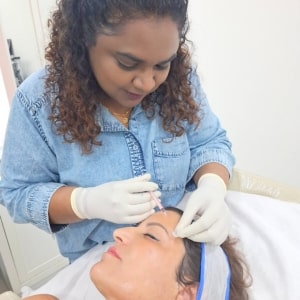
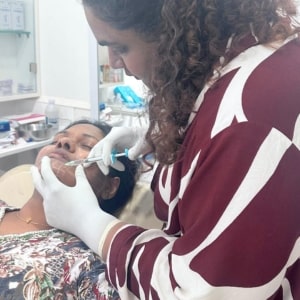
That mole catching on your collar. A wart that keeps coming back. A skin tag on your neck you're tired of hiding. These are among the easiest skin concerns to fix - when treated by the right hands. At Cleaura Clinic, Nagpur, our dermatologist uses advanced laser and radiofrequency technology to remove moles, warts and skin tags safely, with minimal discomfort and no stitches in most cases.
Most patients come to us asking: "Should I be worried about this?" Here's a clear breakdown of the three most common benign skin growths we treat.
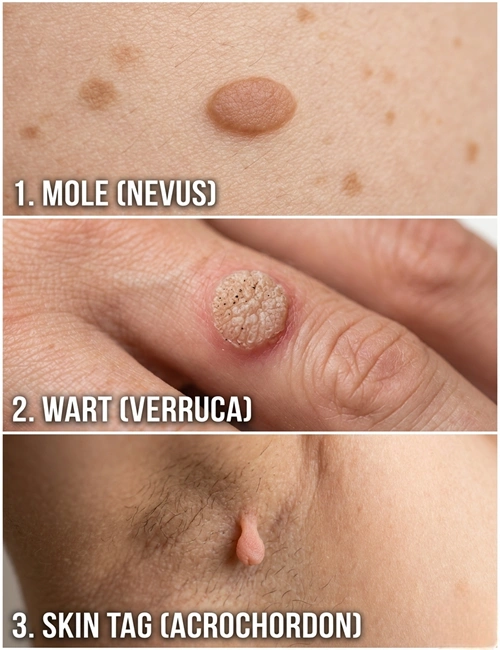
Small clusters of pigment cells appearing as flat or raised spots - ranging from skin-toned to brown or dark. Most moles are harmless and appear due to sun exposure or hormonal changes. You may want removal if they rub against clothing, affect your confidence, or are changing in appearance.
Caused by Human Papillomavirus, warts appear as rough raised bumps - most often on hands, feet, face and nails. They're contagious and can multiply if left untreated. Common types include plantar warts (sole of feet), flat warts (face), filiform warts (near nose/mouth) and common warts (fingers).
Soft, flesh-coloured flaps connected to skin by a thin stalk - usually found on the neck, underarms, eyelids and inner thighs. They're harmless but often uncomfortable, and can be removed in minutes. Also known as neck skin tag removal or underarm skin tag removal in Nagpur.
DPN are small, dark, raised spots commonly seen on the cheeks, forehead, and neck in Indian skin tones. These harmless growths are often mistaken for moles or pigmentation and usually do not improve with creams.
At Cleaura Clinic, DPN removal in Nagpur is performed using advanced RF and laser techniques specially customised for Indian skin, helping minimise the risk of post-inflammatory pigmentation and ensuring safer, smoother results.
Important: Any growth that is bleeding, growing rapidly, has uneven borders or multiple colours should be medically evaluated before any cosmetic removal. At Cleaura, we assess every growth first.
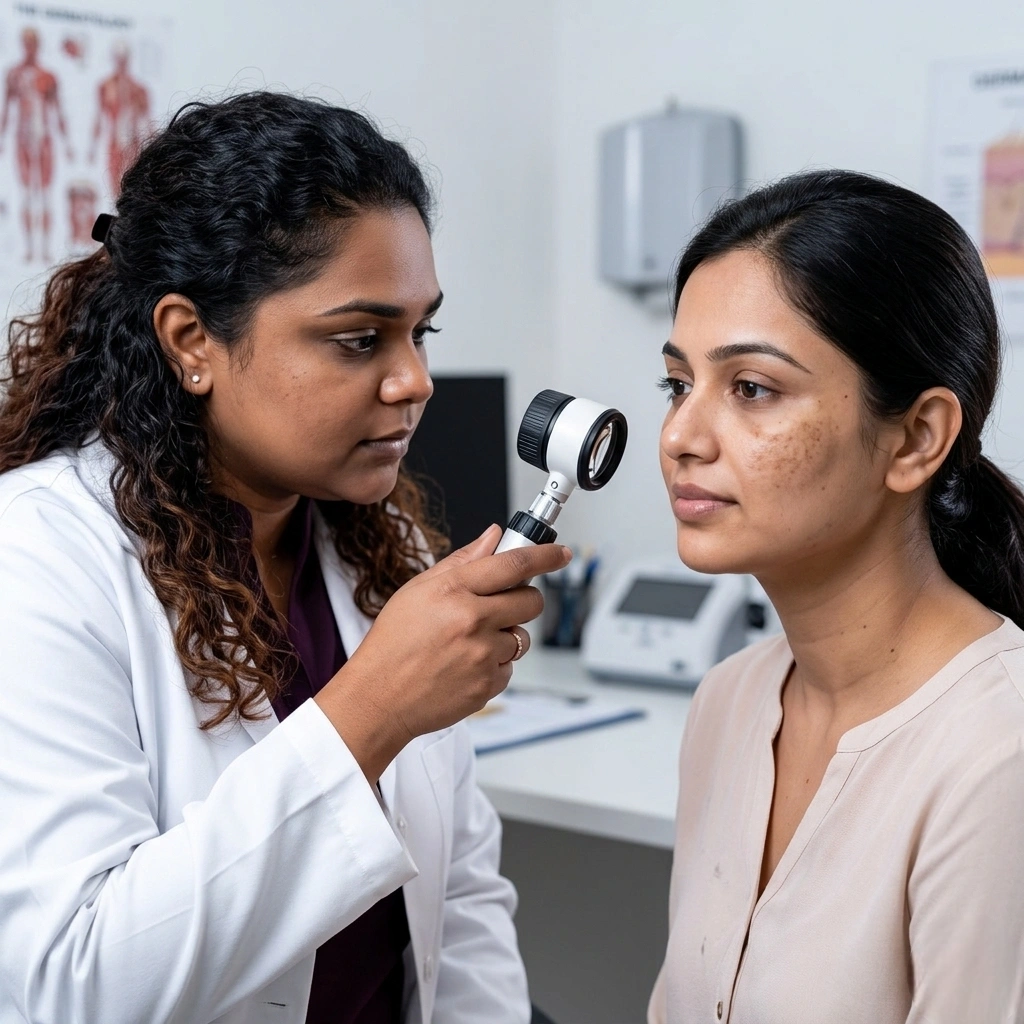
Most moles are completely harmless but some are not. The critical skill is knowing which is which. Our dermatologist assesses every growth at consultation before any removal is planned.
Use the ABCDE rule as your first self-check. If your mole shows any of these signs, book a mole check in Nagpur immediately - do not attempt cosmetic removal before a clinical evaluation.
Important: At Cleaura Clinic, we never remove a mole without first assessing it clinically. If any ABCDE sign is present, a suspicious mole biopsy in Nagpur is recommended before any cosmetic procedure. Your safety always comes before aesthetics.
A - Asymmetry: One half of the mole does not match the other half in shape or size.
B - Border: Edges are uneven, notched, blurred or irregular not smooth and well-defined.
C - Colour: Multiple shades within one mole - brown, black, red, white or blue. Uneven colour distribution.
D - Diameter: Larger than 6mm (roughly the size of a pencil eraser). Any rapid increase in size is concerning.
E - Evolution: Any change in size, shape, colour, texture - or new symptoms like bleeding, itching or crusting.
A mole that bleeds without injury, itches persistently, or has a raised irregular surface should be evaluated immediately - regardless of whether it meets all ABCDE criteria.
After examining your skin growth, our dermatologist recommends the most suitable technique for your specific case - not a one-size-fits-all approach.
High-frequency radio waves precisely target and vaporise the growth while sealing blood vessels — so there's minimal bleeding. Sessions take under 30 minutes. Ideal for raised moles, skin tags and flat warts. Very low risk of scarring. Also called: radiofrequency mole removal Nagpur, RF skin tag removal Nagpur.
Our CO2 laser delivers controlled energy to break down pigmented mole cells or wart tissue with precision — especially effective for facial lesions where scar prevention is the priority. Laser mole removal in Nagpur at Cleaura is particularly useful for flat or slightly raised moles and stubborn warts.
A quick targeted freeze using liquid nitrogen — particularly effective for common and plantar warts. The frozen tissue blisters and naturally falls off within 1–2 weeks. Excellent for treating multiple small warts in one session. Also used for DPN removal Nagpur (Dermatosis Papulosa Nigra), very common in Indian skin.
An electric current burns off small skin tags or warts precisely, leaving surrounding skin untouched. Quick, minimally invasive and often combined with RF for best results. Commonly used for neck skin tag removal and underarm skin tag removal in Nagpur.
For deeper or larger moles, surgical shave excision under local anaesthesia is recommended. This allows the tissue to be sent for biopsy — essential for any mole with suspicious features. You won't feel any pain during the procedure. Suspicious mole biopsy Nagpur is always prioritised over cosmetic removal.
Most mole and wart removal guides are written for lighter skin types. Nagpur's population is predominantly medium-to-dark on the Fitzpatrick scale (Type IV–V) and this changes everything about how treatments should be performed.
When laser or RF energy is applied at the wrong settings to Indian skin, the skin's response is to overproduce melanin at the treated site - leaving a dark patch that can be more visible than the original mole or skin tag. This is called post-inflammatory hyperpigmentation, and it is far more common in darker skin tones.
Clinics that use generic, unmodified laser settings or basic electrocautery equipment - on Indian skin in Nagpur run a real risk of causing PIH. At Cleaura, our RF and CO2 laser parameters are specifically calibrated for Indian skin Fitzpatrick types reducing this risk substantially.
Nagpur is one of India's hottest cities - with intense UV exposure year-round. Sun exposure on a recently treated mole or skin tag site is the single biggest cause of post-treatment pigmentation. At Cleaura, every patient receives a specific sun protection protocol for the treated area not just a generic "use sunscreen" instruction.
RF and laser settings reviewed and adjusted for your specific skin tone before every session
DPN removal protocols designed specifically for medium-to-dark Indian skin
Post-treatment sun protection plan tailored to Nagpur's high UV environment
Prescribed topical ointments that reduce PIH risk during the healing phase
Follow-up visit to catch any early pigmentation changes and treat them before they settle
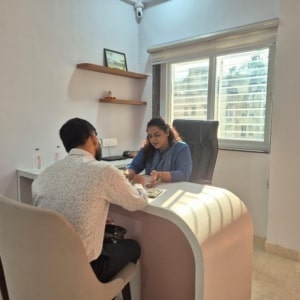
Our dermatologist examines the growth checking size, depth, borders and colour. If anything looks atypical, we recommend a biopsy first. Clearly benign? We plan treatment right away.
The area is thoroughly cleaned. Topical numbing cream (or local anaesthetic for excisions) is applied. You'll be comfortable throughout the entire procedure.
RF and laser treatments take 15–30 minutes. Surgical excisions up to 45 minutes. Most patients describe only a mild warm sensation — not pain. Mole removal without stitches in most cases.
A small antiseptic dressing is applied. You get aftercare instructions and a topical ointment. Most patients return to work the same day. A scab forms naturally and falls off in 7–14 days.
There are several skin clinics in Nagpur. Here's what makes a genuine difference at Cleaura.
Safety first, always - Every removal starts with a clinical assessment. We never remove a skin growth without evaluating whether it needs to be checked for malignancy. A mole check in Nagpur is part of every consultation.
Medical-grade RF & laser devices - Not basic electrocautery pencils. We use equipment calibrated for precision, minimal scarring and clean results.
Honest consultations - We tell you exactly which method suits your case, realistic results to expect and the actual cost — before we begin. No hidden charges.
Indian skin expertise - Nagpur has predominantly medium-to-dark skin tones. Our protocols are calibrated for Indian skin, reducing the risk of post-inflammatory hyperpigmentation that poorly calibrated lasers can cause.
Minimal scarring focus - Technique selection is guided by scar prevention, especially for facial growths. Most patients heal with little to no visible mark — including raised mole removal Nagpur and face mole removal Nagpur.
Cosmetic mole removal near me, Nagpur - Conveniently located with comfortable consultation rooms, hygienic settings and a zero-wait booking system.
Serving patients from Somalwada, Dharampeth, Wardha Road, Dhantoli, Ramdaspeth, Civil Lines, Karve Nagar, Sitabuldi and across Nagpur
Cost depends on the type, size, number and location of growths. Here's an honest general guide for Nagpur - your Cleaura consultation quote is always exact and upfront.
| Treatment | Approximate Range |
|---|---|
| Single skin tag removal (RF / electrocautery) | ₹800 - ₹2,000 |
| Multiple skin tags (per session) | ₹1,500 - ₹5,000 |
| Mole removal - RF or laser (single) | ₹1,500 - ₹4,000 |
| Laser mole removal - face (single) | ₹2,000 - ₹5,000 |
| Wart removal - cryotherapy / RF (per session) | ₹1,500 - ₹6,000 |
| Surgical excision with biopsy | ₹3,000 - ₹8,000+ |
Prices vary based on size, technique and number of lesions. Biopsy charges are separate. Cosmetic mole removal is generally not covered by insurance; medical removal may qualify - our team can help clarify your situation.
Get Your Personalised Cost Estimate →Many people try DIY kits, apple cider vinegar, thread tying or acid applications before seeing a dermatologist and lose weeks dealing with infections, scarring or, in the worst case, a delayed diagnosis of a malignant mole. Here's an honest comparison.
| What Matters | DIY / Home Methods | Cleaura Clinic (Dermatologist) |
|---|---|---|
| Safety | High risk of infection and scarring | Medical-grade sterile environment |
| Malignancy Screening | Cannot detect - biggest hidden danger | Clinical assessment before every removal |
| Pain Management | None | Topical numbing / local anaesthesia |
| Scarring Risk | Very high - uncontrolled tissue damage | Minimised with calibrated RF / laser |
| PIH Risk on Indian Skin | Extremely high | Reduced with Indian-skin protocols |
| Wart Recurrence | High - HPV tissue not fully addressed | Treated with correct antiviral-effect methods |
| DPN Treatment | Not possible safely at home | Calibrated RF/laser for Indian skin |
| Cost | Appears cheap - hides risk of costly fixes | From ₹800 - transparent, upfront |
| Follow-Up Care | None | 1–2 week review included |
The bottom line: Skin growth removal in Nagpur at Cleaura starts at ₹800 for a single skin tag. The cost of treating an infection, correcting a scar or worst case - missing a malignant mole because you removed it at home without a biopsy is infinitely higher. A dermatologist for mole removal in Nagpur is always the right first step.
Looking for answers about mole removal, wart treatment, skin tag removal, DPN removal or laser skin growth treatment in Nagpur? These are the most common questions patients ask before treatment at Cleaura Clinic.
Look for the ABCDE signs: Asymmetry (one half doesn't match the other), Border irregularity (uneven, notched or blurred edges), Colour variation (multiple shades of brown, black, red or white in one mole), Diameter larger than 6mm, and Evolution (any change in size, shape, colour or behaviour over time). At Cleaura Clinic Nagpur, every mole is clinically assessed at consultation — if any ABCDE sign is present, a suspicious mole biopsy is recommended before any cosmetic procedure. Never remove an atypical mole cosmetically without prior medical evaluation.
DPN (Dermatosis Papulosa Nigra) are small, dark, raised bumps that appear on the face, cheeks and neck — extremely common in people with Indian skin tones. Unlike moles, DPN is not caused by melanocyte clusters and carries no malignancy risk. However, DPN removal in Nagpur requires laser or RF protocols specifically calibrated for darker skin — standard laser settings used on lighter skin can cause post-inflammatory hyperpigmentation (PIH) in Indian patients. At Cleaura Clinic, our DPN removal protocols are designed for Nagpur's predominantly medium-to-dark skin population.
Yes. Warts are caused by HPV (Human Papillomavirus) and are contagious — they spread through direct skin contact with an infected person or contaminated surfaces (shared towels, floors). Picking or scratching an existing wart can spread it to other parts of your own body. This is why early HPV wart treatment in Nagpur is important — delaying treatment allows warts to multiply. At Cleaura Clinic, we remove existing warts and advise on preventing recurrence and transmission.
Yes — post-inflammatory hyperpigmentation (PIH) is a real risk after mole and wart removal on Indian skin, particularly when poorly calibrated laser settings are used. Nagpur's predominantly medium-to-dark skin population is significantly more prone to PIH than lighter skin types. At Cleaura Clinic, our laser and RF protocols are specifically calibrated for Indian skin tones — reducing this risk substantially. Proper aftercare (avoiding sun exposure for 4–6 weeks, using prescribed ointments) further reduces pigmentation risk after treatment.
Yes, it matters significantly for treatment choice. A mole is caused by pigment cell clusters and is removed with RF or laser. A wart is caused by HPV virus and requires antiviral-effect treatments like cryotherapy, RF or laser to destroy the infected tissue. A skin tag is a benign growth of excess skin removed quickly with RF or electrocautery. Treating a wart as a skin tag (without addressing the HPV tissue) can lead to recurrence. At Cleaura Clinic Nagpur, your dermatologist diagnoses the exact type of growth before recommending treatment — because the right diagnosis determines the right result.
Skin tags, once properly removed, do not return at the same spot. Moles removed by RF or laser — where the full growth is vaporised — have very low recurrence rates. Warts, however, can recur after removal because HPV (the virus causing them) may remain dormant in surrounding tissue. Plantar warts especially can require multiple sessions. At Cleaura Clinic Nagpur, we advise realistic expectations at consultation: wart removal in Nagpur typically needs 1–3 sessions for common warts and up to 5 sessions for stubborn plantar warts.
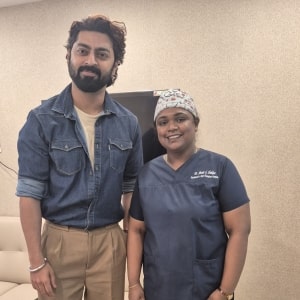
You should consult a qualified dermatologist or aesthetic physician with specific experience in skin lesion assessment and medical-grade laser or RF removal equipment. Dr. Shruti Gunashekhar at Cleaura Clinic, Nagpur, is a Singapore-trained surgeon and Canadian Board-Certified Aesthetic Physician who performs clinical mole assessment before every removal procedure — including biopsy referral where indicated. The clinic uses medical-grade RF and CO2 laser equipment, not basic electrocautery pencils.
No. Home removal methods — including DIY kits, tying off skin tags with thread, or applying apple cider vinegar or acids — carry serious risks: infection, scarring, and critically, missing a potentially malignant mole that looks benign. A mole that appears innocent to the naked eye may show atypical features under dermatoscopic examination that warrant biopsy. Professional skin growth removal in Nagpur at Cleaura Clinic starts from ₹800 — making the risk of DIY methods completely unjustifiable.
Mole removal cost in Nagpur typically ranges from ₹1,500 to ₹4,000 for RF or standard laser removal of a single mole. Facial laser mole removal usually costs ₹2,000 to ₹5,000 depending on the size, depth and location of the mole. Suspicious moles requiring surgical excision and biopsy generally range from ₹3,000 to ₹8,000+. The exact price depends on whether the mole is raised, flat, pigmented, facial, large, or medically suspicious.
Skin tag removal in Nagpur usually starts from ₹800 to ₹2,000 for a single skin tag using RF or electrocautery. Multiple skin tags treated in one session generally cost between ₹1,500 and ₹5,000 depending on the number, size and body area involved. Neck skin tag removal and underarm skin tag removal are among the most commonly requested procedures at Cleaura Clinic.
Wart removal cost in Nagpur generally ranges from ₹1,500 to ₹6,000 per session depending on the type of wart and treatment used. Common warts often need fewer sessions, while plantar warts and multiple HPV warts can require repeated cryotherapy or RF treatment. The final cost depends on wart size, location, number of lesions and whether laser, RF or cryotherapy is recommended.
Both laser and RF mole removal are effective, but the best option depends on the type of mole. RF removal is often preferred for raised moles and skin tags because it precisely vaporises tissue with minimal bleeding. CO2 laser mole removal is commonly used for smaller facial moles where precision and cosmetic outcome are especially important. At Cleaura Clinic, the treatment is selected only after examining the lesion directly.
Most procedures are quick and completed within 15 to 45 minutes depending on the number and type of growths being treated. Small skin tags and superficial moles are often removed in a single short sitting. Larger warts, multiple lesions or surgical excisions may take longer. Most patients return to normal activities immediately after treatment.
Most common cosmetic moles do not need biopsy before removal. However, if a mole shows suspicious ABCDE signs, sudden growth, bleeding, itching, irregular pigmentation or rapid change, a biopsy is strongly recommended before cosmetic treatment. At Cleaura Clinic Nagpur, patient safety always comes before cosmetic removal.
Skin tags removed completely usually do not return at the same location. Properly removed moles also have very low recurrence rates. Warts can recur because HPV virus may remain inactive in nearby tissue even after treatment. Following the recommended aftercare and completing all advised sessions significantly reduces recurrence risk.
Whether it's one mole, a cluster of warts or skin tags in multiple areas — our dermatologist will assess your skin honestly and give you the fastest, safest route to smooth, clear skin. No pressure. No upselling. Just real, dermatologist-guided skin care in Nagpur.